
In most cases the itch after a pre-workout comes from beta-alanine. This amino acid stimulates nerve endings in the skin, so within minutes of drinking it the skin on your arms, trunk and face starts to itch or tingle. The feeling peaks after about 15 minutes, is strongest in the first half hour and is gone completely within two hours. According to the International Society of Sports Nutrition (ISSN) it is the only reported side effect of beta-alanine. It is not an allergy, and it is not proof that the pre-workout is working.
Short answer
The itch is caused by beta-alanine in a single dose above roughly 800 mg. It arrives fast, peaks after about 15 minutes and goes away on its own within two hours. If you do not want it, you have three options: a smaller dose, slow-release beta-alanine, or a pre-workout without beta-alanine. A rash, swelling or difficulty breathing is not the beta-alanine itch and needs a doctor.
Contents
- Why pre-workout makes your skin itch
- Where it itches and how long it lasts
- Is the pre-workout itch dangerous?
- Does the itch mean the pre-workout is working?
- Niacin and other causes of itching
- How to avoid the itch
- A pre-workout without the itch: what to look for on the label
- Frequently Asked Questions
- Sources
Why pre-workout makes your skin itch
Beta-alanine is an amino acid that manufacturers add to many pre-workouts. Once it reaches the blood, it binds to a receptor in the skin called MrgprD. That receptor sits on nerve fibres that carry the itch signal to the brain. The result is itching, tingling or a pins and needles feeling. The technical name is paresthesia.
The mechanism was described by Liu and colleagues in 2012. When beta-alanine was injected into human skin, it caused itch but no wheal and no redness. Histamine, which drives allergic itching, plays no part in it.
The dose decides. Single doses above 800 mg commonly cause these sensations (Décombaz and colleagues, 2012). Many pre-workouts carry more than that in one scoop, which is why so many people know the feeling.
Where it itches and how long it lasts
| Question | What the measurements showed |
|---|---|
| Where it itches | The skin of the arms and trunk. People also commonly describe the face, ears and neck. |
| When it starts | Within minutes of drinking, with a peak at about 15 minutes. |
| How long it lasts | It is strongest in the first half hour. The feeling follows the level of beta-alanine in the blood, which returns to baseline within two hours. |
| From what dose | Commonly at a single dose above 800 mg. |
How strong it feels varies from person to person. In a study where participants drank 1.6 g of beta-alanine in solution, they rated the intensity as low. Some people do not mind it at all, others find it distracting during training.
Is the pre-workout itch dangerous?
According to the available data, no. In its 2015 position stand the ISSN states that beta-alanine appears to be safe for healthy people at recommended doses and that paresthesia is its only reported side effect. A 2019 review of 101 human studies (Dolan and colleagues) also found paresthesia to be the only reported side effect.
Other symptoms do not belong to beta-alanine. If any of these appear, stop taking the product and see a doctor:
- a rash, hives, or swelling of the lips, tongue or face
- difficulty breathing or pressure in the chest
- a pounding heart, dizziness or nausea
Pre-workouts with caffeine are not recommended for children or for pregnant or breastfeeding women. If you take medication or have heart disease or high blood pressure, talk to a doctor before use.
Does the itch mean the pre-workout is working?
No. The itch is a reaction of nerves in the skin, not of the muscles.
Beta-alanine also does not work from a single dose. According to the ISSN it takes 4 to 6 g a day for at least 2 to 4 weeks to raise the carnosine stores in muscle. One dose right before training does not change those stores. The feeling that "it is kicking in" is only a side effect, and it says nothing about the quality of a pre-workout.
Niacin and other causes of itching
The second possible cause is niacin, vitamin B3, but only in one form. Nicotinic acid widens the blood vessels in the skin, so the skin turns red, feels warm and itches (Kamanna and colleagues, 2009). For that reason the EU Scientific Committee on Food set an upper limit of 10 mg a day for nicotinic acid in 2002. For nicotinamide, the other form of vitamin B3, the limit is 900 mg a day, because it does not cause flushing.
| Cause | What it looks like | What to do |
|---|---|---|
| Beta-alanine | Itching, tingling, pins and needles. No rash and no swelling. | It fades on its own within two hours. |
| Nicotinic acid (a form of vitamin B3) | Redness, warmth, itching. | Temporary. Check the form of vitamin B3 on the label. |
| Allergic reaction | Rash, hives, swelling, difficulty breathing. | Stop taking it and see a doctor. |
If your skin itches during training even without a pre-workout, the cause is something else and it is a question for a doctor.
How to avoid the itch
- A smaller dose. The threshold is around 800 mg of beta-alanine at once. If the manufacturer states the exact amount, try half a scoop.
- Divided doses or slow release. The ISSN recommends smaller doses of 1.6 g or a sustained-release form. In a 2012 study the sensations after 1.6 g in slow-release tablets could not be told apart from placebo.
- A pre-workout without beta-alanine. The simplest answer if the itch bothers you. The benefit of beta-alanine depends on long-term daily intake, not on the dose before training. If you want it, you can take it separately in divided doses.
Once the itch has started, you cannot switch it off. It fades on its own.
A pre-workout without the itch: what to look for on the label
Three things are worth checking on the label:
- Is beta-alanine listed, and how much? Above 800 mg per dose, expect the itch.
- Are exact doses stated? With blends that give no milligrams, the amount of beta-alanine cannot be worked out.
- Which form of vitamin B3 is it? Nicotinamide does not cause flushing, nicotinic acid can.
You can check a formula in our label analyzer. There is more on choosing in the guide to pre-workouts without beta-alanine.
How Aftershock handles it
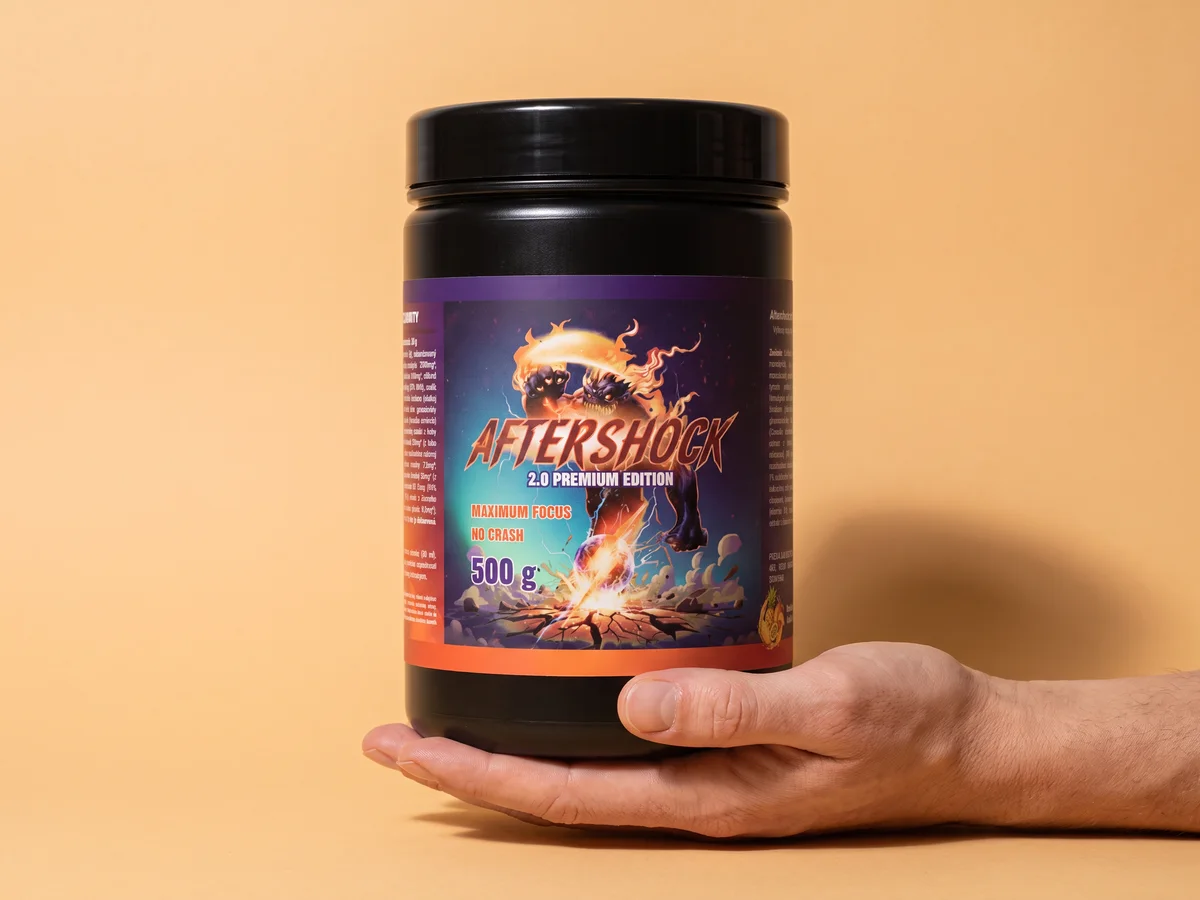
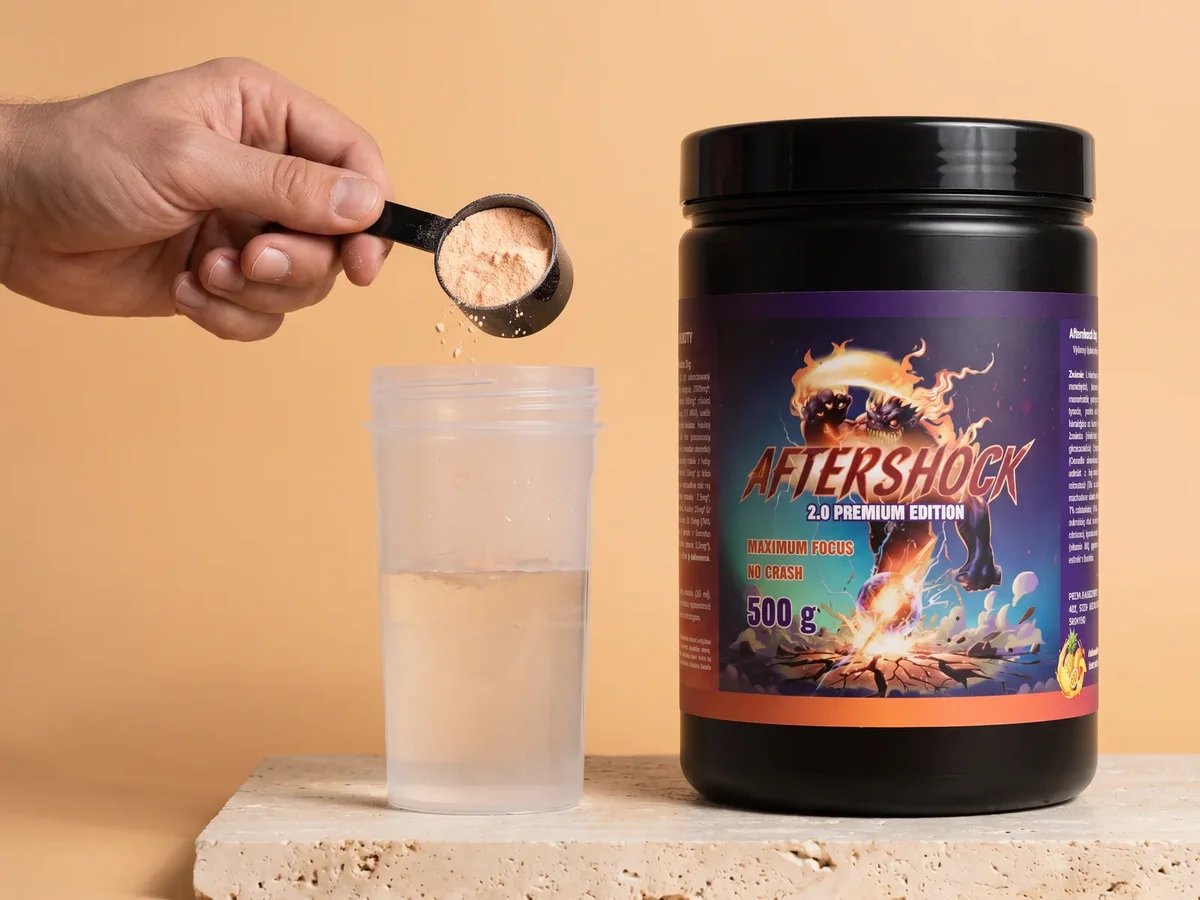
Aftershock contains no beta-alanine, 0 g. That is deliberate: the itch is a distraction during training, and a single dose of beta-alanine brings no benefit. According to the label, its vitamin B3 is in the nicotinamide form (15 mg).
Nine Aftershock ingredients and one intruder:
The text in the clip is Slovak: "One of them does not belong here", "Out!", "Beta-alanine 0 g, not in the formula".
The main ingredients in one dose of Aftershock V2 Premium:
| Ingredient | Amount per dose |
|---|---|
| L-citrulline | 5 g |
| Creatine | 2.5 g |
| Betaine | 2.5 g |
| L-tyrosine | 1 g |
| L-theanine | 320 mg |
| Caffeine | 160 mg |
| Beta-alanine | 0 g |
The original Aftershock has the same base and is also free of beta-alanine.
Frequently Asked Questions
Why does my face itch after a pre-workout?
In most cases the itch on the face, ears and hands comes from beta-alanine. It activates nerve fibres in the skin that carry the itch signal. It shows up at a single dose above roughly 800 mg and it is not an allergy.
How long does the pre-workout itch last?
It starts within minutes, peaks about 15 minutes after drinking and is strongest in the first half hour. Then it fades together with the level of beta-alanine in the blood, which returned to baseline within two hours in measurements.
Is the pre-workout itch dangerous?
According to the 2015 ISSN position stand, paresthesia is the only reported side effect of beta-alanine, which appears to be safe for healthy people at recommended doses. A rash, swelling or difficulty breathing is a different matter and needs a doctor.
Is the pre-workout itch an allergy?
No. The beta-alanine itch does not work through histamine and does not come with a rash or swelling. If a rash or swelling appears, stop taking the product and see a doctor.
Does tingling mean the pre-workout is working?
No. Tingling is a reaction of nerves in the skin. The benefit of beta-alanine comes after weeks of taking 4 to 6 g a day, not from one dose before training.
How do I stop the itch once it has started?
You cannot stop it, it fades on its own within two hours. Next time a smaller dose or a pre-workout without beta-alanine will help.
Is there a pre-workout without the itch?
Yes. It only needs to contain no beta-alanine and no nicotinic acid, the two known causes. Aftershock contains no beta-alanine, and according to the label its vitamin B3 is in the nicotinamide form.
Sources
- Trexler E. T. et al.: International Society of Sports Nutrition position stand: Beta-Alanine. Journal of the International Society of Sports Nutrition, 2015. PubMed 26175657
- Liu Q. et al.: Mechanisms of itch evoked by β-alanine. The Journal of Neuroscience, 2012. PubMed 23077038
- Décombaz J. et al.: Effect of slow-release β-alanine tablets on absorption kinetics and paresthesia. Amino Acids, 2012. PubMed 22139410
- Harris R. C. et al.: The absorption of orally supplied beta-alanine and its effect on muscle carnosine synthesis in human vastus lateralis. Amino Acids, 2006. PubMed 16554972
- Dolan E. et al.: A Systematic Risk Assessment and Meta-Analysis on the Use of Oral β-Alanine Supplementation. Advances in Nutrition, 2019. PubMed 30980076
- Kamanna V. S. et al.: The mechanism and mitigation of niacin-induced flushing. International Journal of Clinical Practice, 2009. PubMed 19691622
- Scientific Committee on Food (SCF): Opinion on the Tolerable Upper Intake Levels of Nicotinic Acid and Nicotinamide (Niacin), 2002.
Related articles
Try Aftershock and experience the power of nootropics.
Order Aftershock