
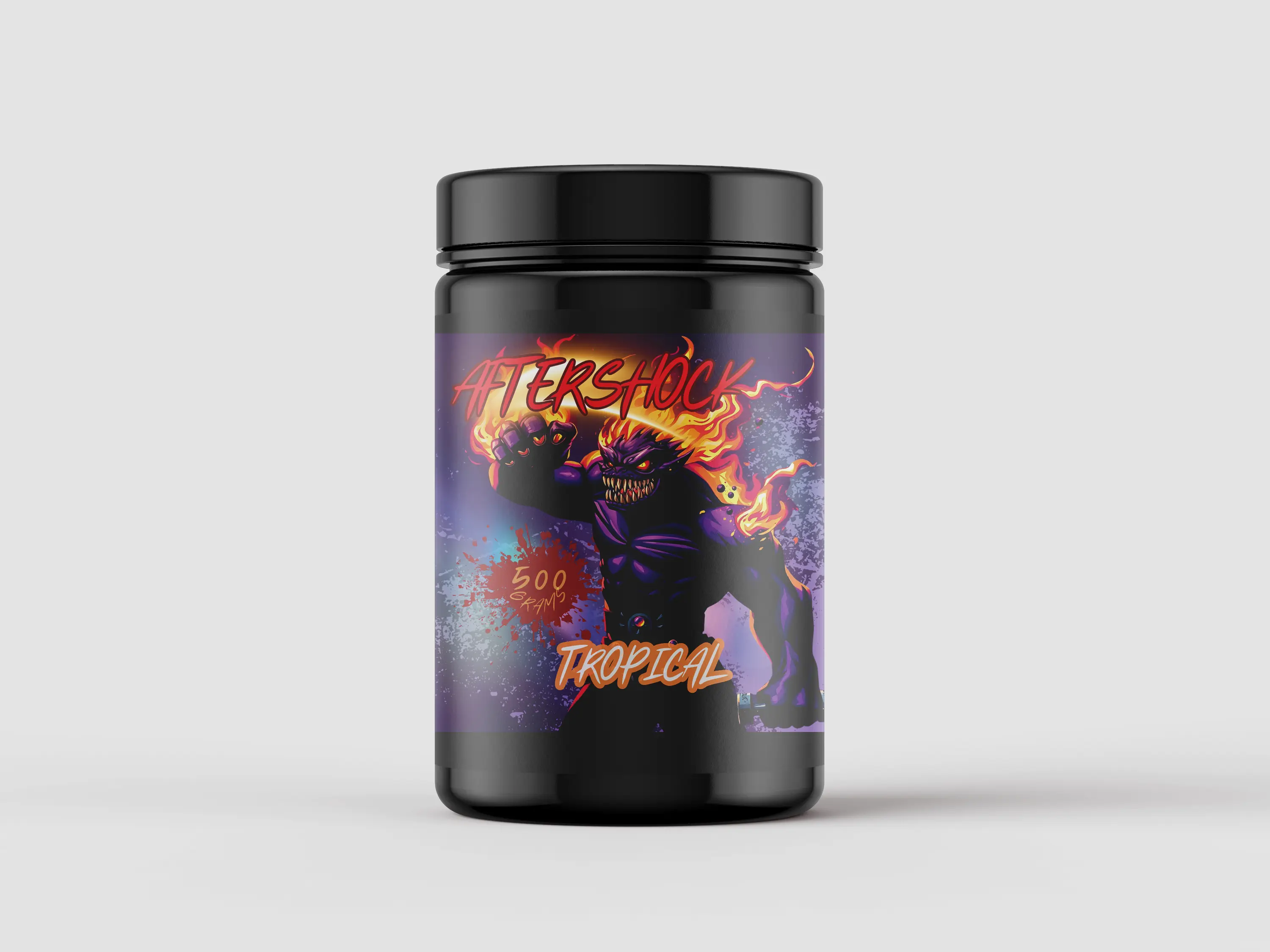
Aftershock is not a product for everyone. That is fine. It makes the most sense for people who do not want the harshest stimulant possible, but a more balanced pre-workout built around training focus, performance support, and transparent labeling.
Table of Contents
- Key Takeaways
- 1. Aftershock makes sense if you want more than raw stimulation
- 2. A moderate caffeine profile may fit better than an aggressive formula
- 3. The formula combines performance and focus ingredients in one serving
- 4. Transparent labeling and no beta-alanine are a real plus for some people
- 5. The biggest value comes from consistent use, not from a miracle on the first scoop
- Frequently Asked Questions
- Related Articles
Key Takeaways
| Takeaway | Detail |
|---|---|
| Aftershock is not built around raw stim strength alone | The bigger point is the combination of caffeine, L-theanine, and surrounding ingredients. |
| A milder formula can be more practical than a very aggressive one | More stimulation does not automatically mean a better workout or better sleep afterward. |
| Transparent labeling makes comparison easier | Exact doses are more useful than vague proprietary blends. |
| The product only makes sense if it fits your routine | Evening training, caffeine sensitivity, or unrealistic expectations may make it a poor fit. |
1. Aftershock makes sense if you want more than raw stimulation
Many pre-workouts are sold through the feeling of being as strong and intense as possible. That can work if someone only wants a sharp hit of energy. But not everyone responds well to that style. Some people are looking for a formula that helps them stay focused on technique, pacing, and the overall quality of the session.
That is where Aftershock can be appealing. Not because it automatically beats every other product, but because it is built a bit differently than a classic high-stim pre-workout. It combines caffeine with ingredients aimed at a steadier training feel rather than just a harsher start.
If you care more about a controlled workout feeling than about chasing the strongest buzz, that alone is a valid reason to consider it.
2. A moderate caffeine profile may fit better than an aggressive formula
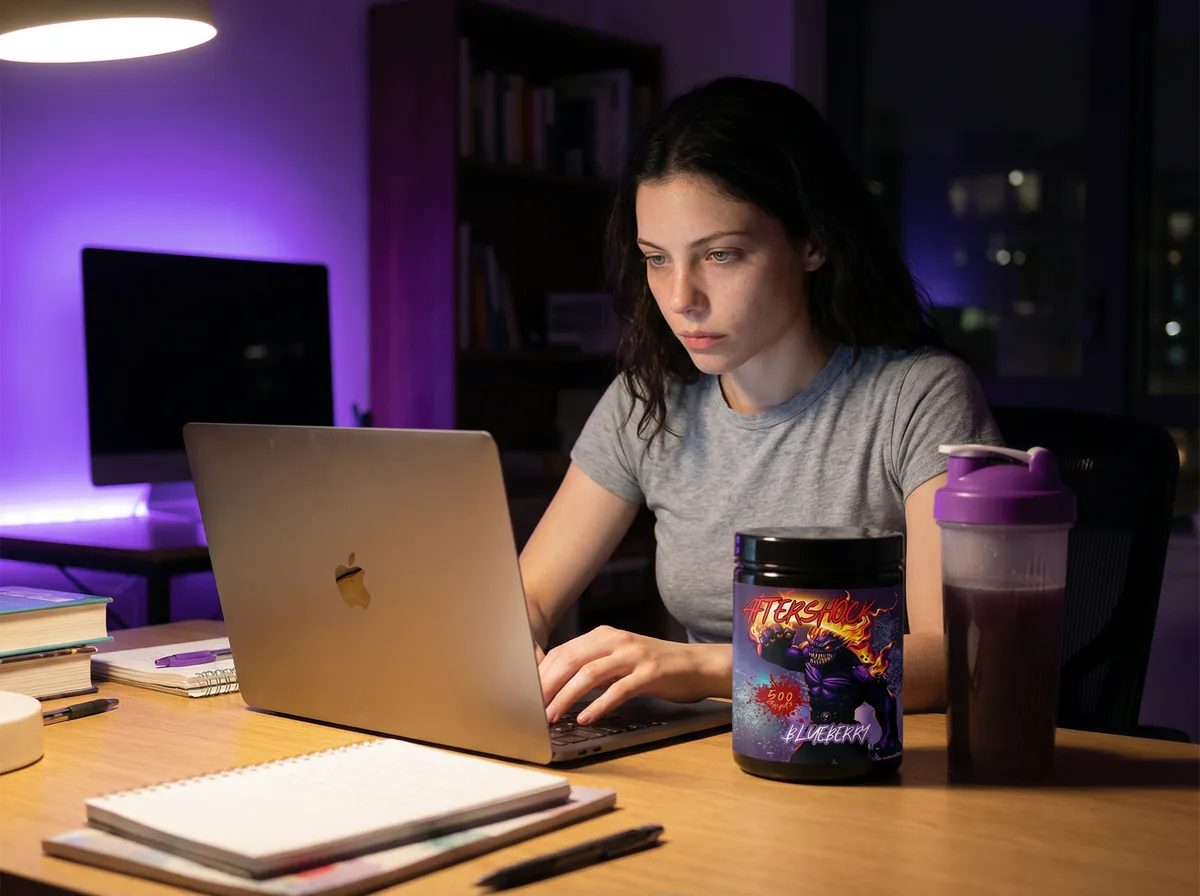
Caffeine remains the main ingredient that affects alertness and perceived energy in most pre-workouts. At the same time, its effects are highly individual. For some people, 160 mg is a comfortable middle ground. For others, it is already a lot. And for someone who already drinks several coffees a day, it may be one more meaningful addition to total intake.
The literature on caffeine supports its acute use for several aspects of exercise performance, but it also makes clear that response varies between people and depends on dose and tolerance. ISSN position stand on caffeine and exercise performance
With Aftershock, the relevant point is that caffeine is not the only part of the formula. L-theanine may change the subjective feel of caffeine for some users, leading to a smoother experience. That does not mean the product stops being stimulating. It means the goal is not only to feel harder stimulation.
For some people, that is exactly why the formula is worth considering.
3. The formula combines performance and focus ingredients in one serving
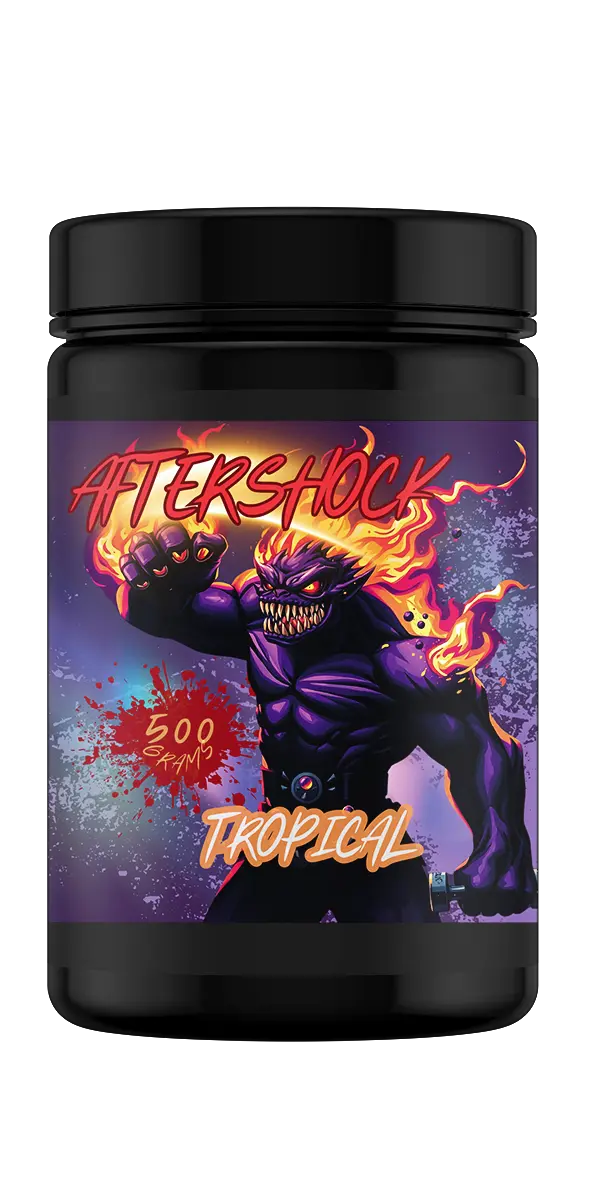
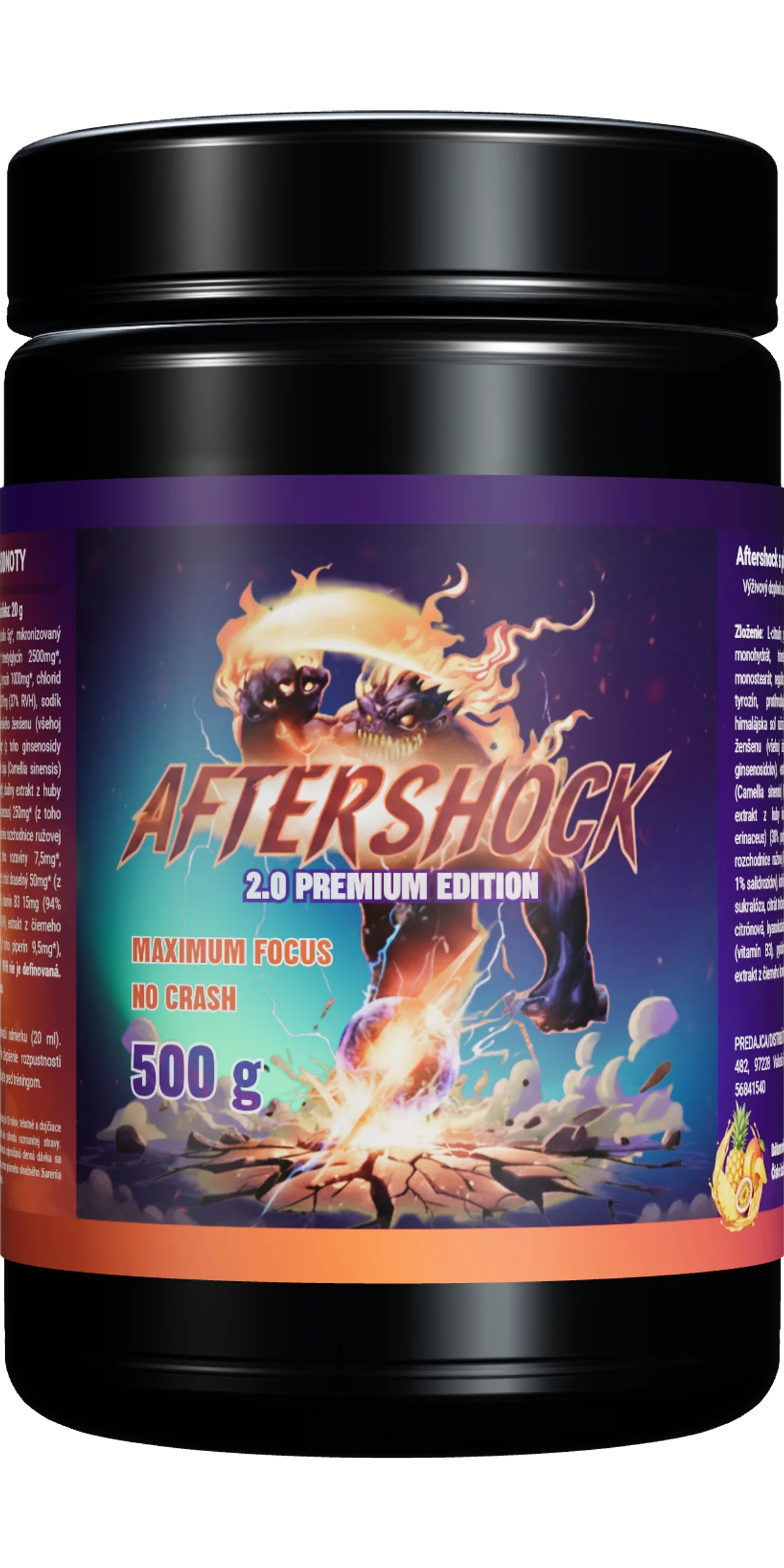
Aftershock is not a pure nootropic product, and it is not just a simple caffeine pre-workout either. Its practical appeal is that it combines a performance layer and a focus layer in one serving.
Based on the current product data in the repo, the formula includes citrulline, creatine, betaine, caffeine, L-theanine, lion’s mane, rhodiola, and ginseng. In practice, that means the product is not trying to work only through head buzz. It also includes classic pre-workout ingredients that affect workout feel and work capacity.
That kind of mix may be useful for people who:
- do not want to manage several separate supplements
- prefer one consistent formula instead of building their own stack
- want both training focus and performance support in one product
If you are looking for a pure all-day office supplement rather than a training product, Aftershock is probably not the first choice.
4. Transparent labeling and no beta-alanine are a real plus for some people
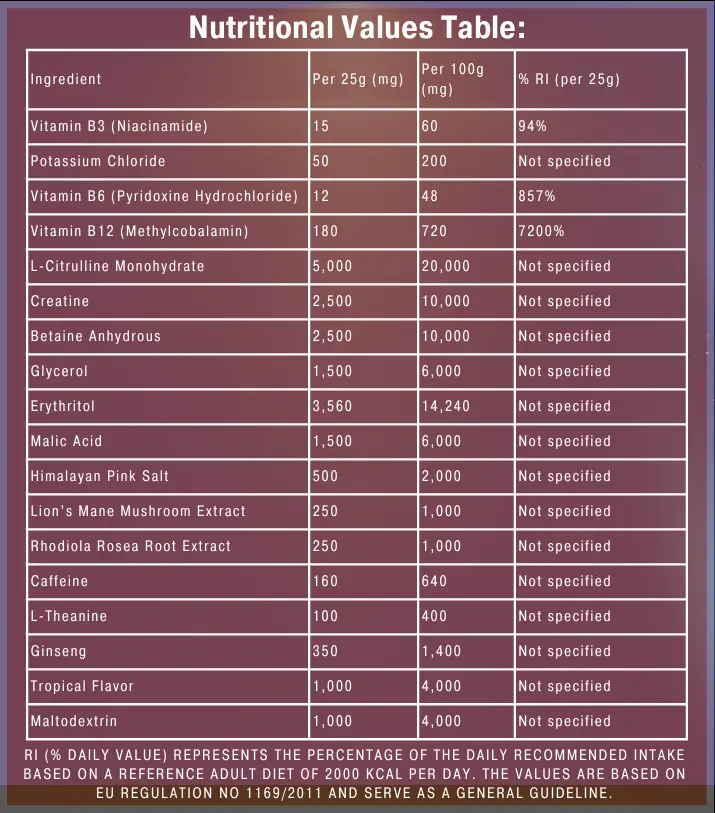
One of the most practical things when choosing a pre-workout is simply knowing what is inside it. Transparent labeling does not automatically mean a better product, but it does make comparison easier and leaves less room for marketing fog.
For some people, the lack of beta-alanine is also a meaningful advantage. Beta-alanine is not inherently bad and it has its place, but many users do not like the tingling sensation it creates. If you are one of them, leaving it out is a legitimate reason to prefer a different formula.
The same applies to the stimulant profile. Not everyone wants a product that feels like a wall of energy. Some people do better with a more even workout experience.
5. The biggest value comes from consistent use, not from a miracle on the first scoop

The most common mistake with pre-workouts is expecting them to fix everything at once. Poor sleep, low hydration, chaotic training, too much coffee, no routine. A product then disappoints not because it is automatically bad, but because the expectation is unrealistic.
Aftershock makes the most sense when:
- your routine is already reasonably stable
- you know a moderate caffeine dose works for you
- you want a pre-workout with a focus angle
- you are not chasing extreme stimulation
It makes far less sense when you train late in the evening, caffeine regularly harms your sleep, or you only want the cheapest and simplest stimulant possible.
Frequently Asked Questions
Who is Aftershock best suited for?
Mostly for people who want a pre-workout with a more balanced stimulant profile and support for both training focus and performance.
Is Aftershock a very strong pre-workout?
Not in the sense of an extreme high-stim product. It is better described as a more balanced formula with a moderate caffeine dose.
Does it make sense if I am sensitive to caffeine?
Possibly, but only with caution. Caffeine sensitivity is individual, and total intake from coffee or energy drinks still matters.
Is no beta-alanine a real advantage?
For some people, yes. Especially if they dislike tingling or do not want their pre-workout built around that sensation.
Is Aftershock suitable outside training?
It is primarily a pre-workout. If you want a supplement for general workday productivity, a simpler and less training-oriented option may fit better.
Related Articles
Try Aftershock and experience the power of nootropics.
Order Aftershock