

Mental performance in sport does not sound as exciting as a new PR or a harder-hitting stimulant. Still, it often decides whether a session is high quality or whether you just grind through it. This guide stays practical: what mental performance means in sport, what influences it most, and where supplements can fit in without overstating their role.
Table of Contents
- Key Takeaways
- What mental performance means in sport
- Sleep, stress, and routine matter more than most hacks
- Mind-muscle connection is more a trainable skill than magic
- Caffeine and supplements can help, but only on top of a solid base
- Mental performance can be trained like technique
- Where Aftershock may fit
- Frequently Asked Questions
- Related Articles
Key Takeaways
| Takeaway | Detail |
|---|---|
| Mental performance in sport is not just motivation | It includes attention, decision-making, technique under fatigue, and stress regulation. |
| Routine is the base | Sleep, fatigue, and stress matter more than most supplements. |
| Mind-muscle connection can be trained | Specific cues, breathing, tempo, and repetition help more than vague theory. |
| Supplements only make sense on top of a functioning base | Caffeine or a pre-workout will not cover for chaotic habits or poor stimulant tolerance. |
What mental performance means in sport

Mental performance in sport can be overcomplicated. In practice, it mostly means:
- you can stay focused on what you are doing
- you hold technique under fatigue
- you avoid chaotic decisions
- you have enough alertness without feeling shaky
- you can handle pressure before or during difficult efforts
This will look different in strength training, endurance work, or team sports, but the principle is the same. Mental performance is not separate from physical performance. It is tied into almost every moment where you need pacing, positioning, technique, or a response to fatigue.
Sleep, stress, and routine matter more than most hacks

The biggest mistake in this topic is searching for a “brain supplement” before admitting what the daily routine looks like. If you sleep poorly, run under constant stress, and rely on caffeine mainly to survive the day, the main problem is not the lack of a more advanced formula.
That is why mental performance often improves most from boring changes:
- more regular sleep
- less late-day caffeine
- better hydration
- less task switching
- a more consistent pre-training routine
Those things are not flashy. But they usually matter more than another stack.
Mind-muscle connection is more a trainable skill than magic

Mind-muscle connection is often sold as something mystical. In reality, it is closer to the ability to direct attention deliberately during movement. In strength training, that means:
- knowing what you want to feel in a rep
- having a clear movement cue
- not running the set on autopilot
- reducing unnecessary distractions between sets
That ability is built through training. It helps to use:
- one short mental cue before a set
- a stable setup
- controlled tempo on technical lifts
- feedback on problem movements
In other words, mind-muscle connection is not proof of a special neuro state. It is attention plus repetition plus better self-coaching.
Caffeine and supplements can help, but only on top of a solid base

Caffeine is still the most practical supplement tool for mental and sport performance. The ISSN position stand supports its acute use for several performance outcomes while also emphasizing individual variability and dose. ISSN position stand on caffeine and exercise performance
For products with a focus angle, caffeine plus L-theanine is also relevant. Not because it is magic, but because some people report a smoother experience. Haskell et al.
A realistic expectation from supplements is:
- slightly better alertness
- a better training feel
- easier concentration during sets or intervals
An unrealistic expectation is:
- replacing sleep
- fixing chronic stress
- dramatically improving technique without practice
Mental performance can be trained like technique

If you want better mental performance in sport, it helps to have a concrete system. Not a complicated one. Just one you can repeat.
Examples:
- one clear cue 30 to 60 seconds before a set
- less phone distraction between sets
- brief breathing to reset before technical attempts
- a short review after training of where attention drifted
That is usually more useful than big talk about neuroscience. Mental performance improves when it becomes a trainable skill.
Where Aftershock may fit
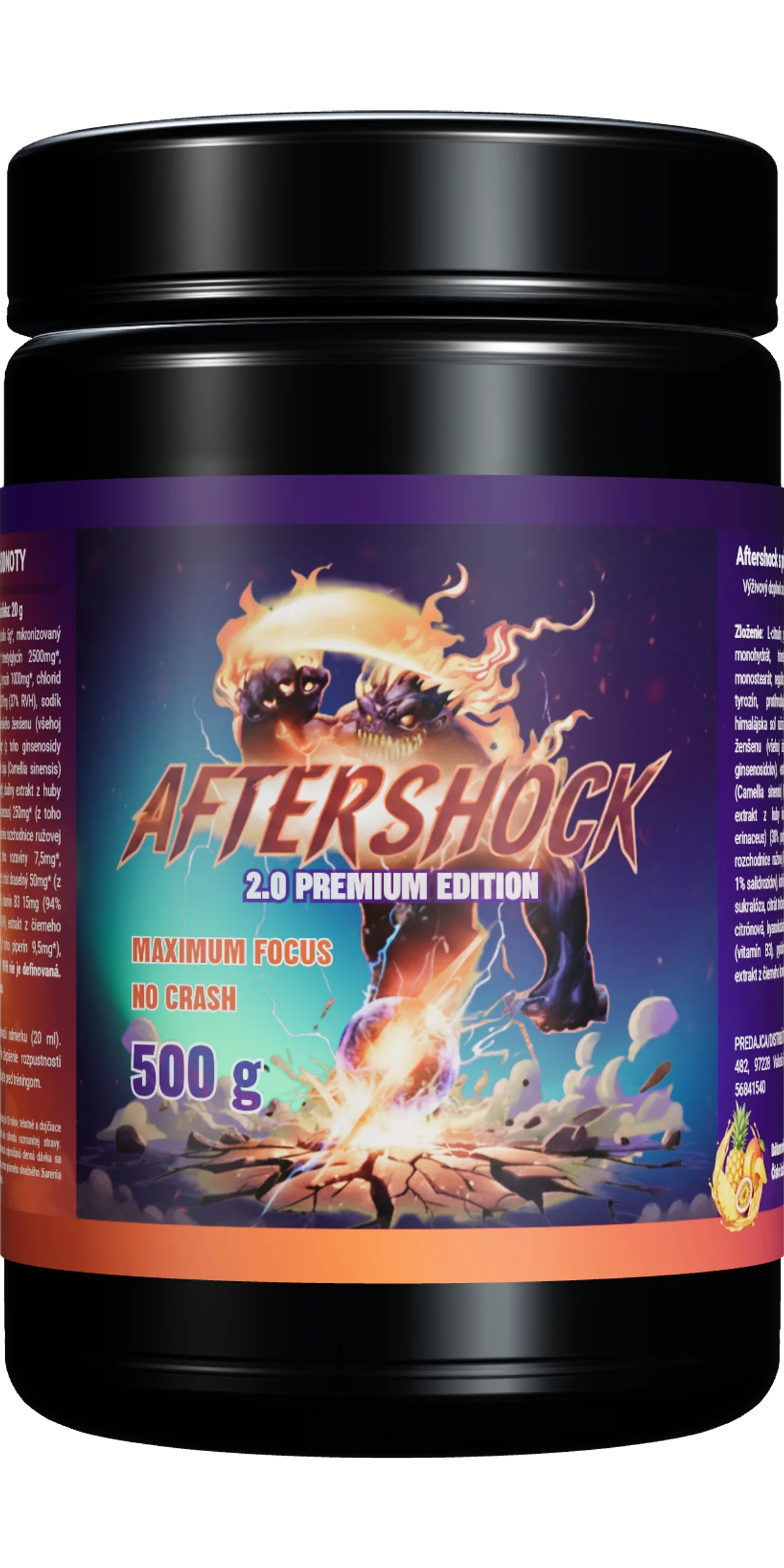
Aftershock V2 Premium may fit when you want a single formula that supports both training focus and performance. It makes more sense for people who do not want only an aggressive stimulant, but a more balanced pre-workout with transparent labeling.
It does not make much sense to frame it as the solution to mental performance in sport as a whole. Its place is better understood as a supplement layered on top of decent sleep, good training, and sensible caffeine use.
Frequently Asked Questions
What is mental performance in sport?
The ability to maintain attention, technique, decision-making, and control under fatigue or pressure.
Can mental performance improve without supplements?
Yes. Often the biggest gains come from sleep, routine, fewer distractions, and better training structure.
Does caffeine help the mental side of performance too?
Yes, often with alertness and readiness. But poor dosing or timing can also backfire.
Is mind-muscle connection real?
Yes, but it should not be mystified. It is mostly trained attention during movement.
When might a pre-workout like Aftershock make sense?
When you already have a reasonable base and want a supplement for both performance and focus, not a replacement for routine.
Related Articles
Try Aftershock and experience the power of nootropics.
Order Aftershock