
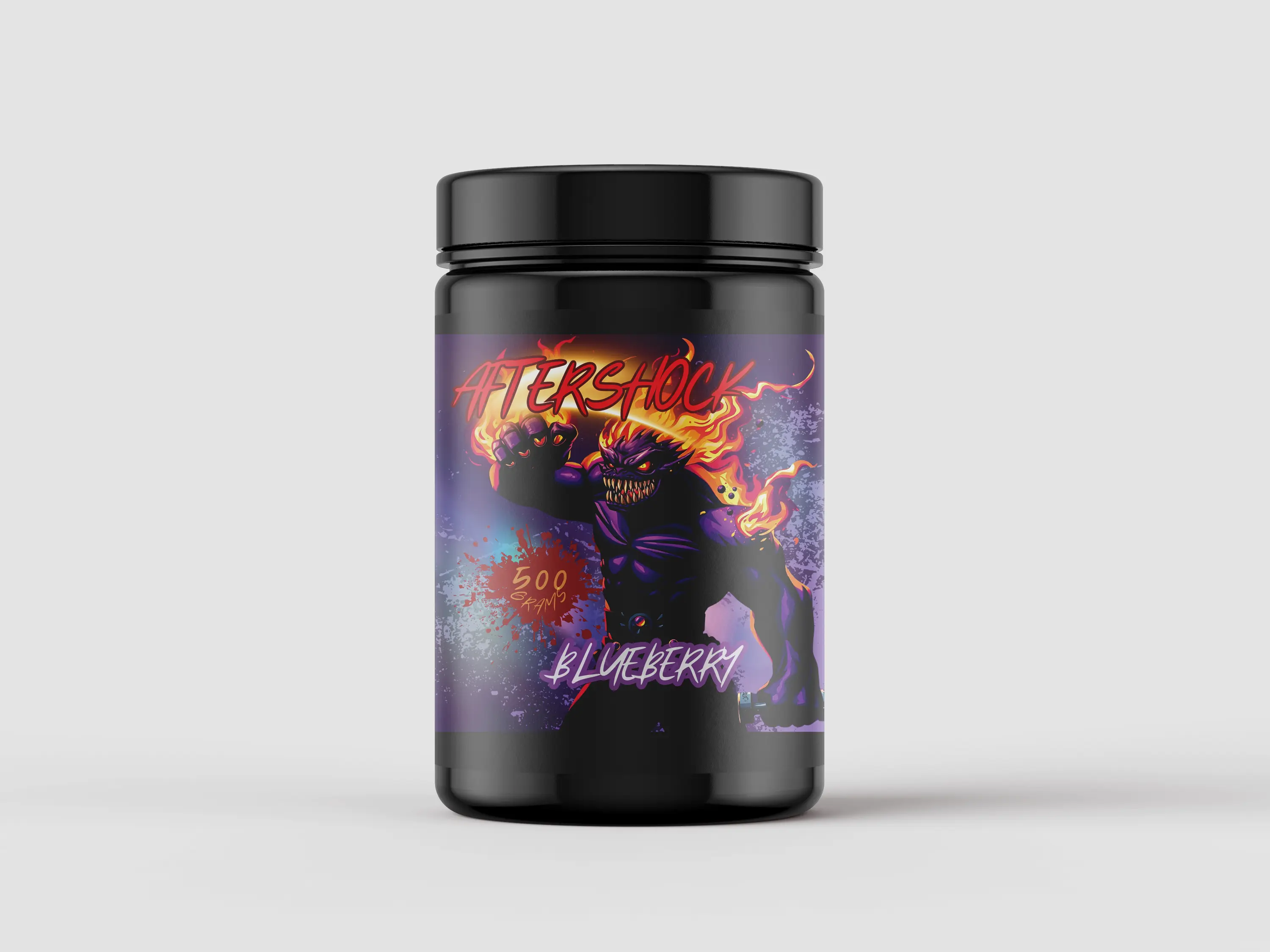
When we talk about mental focus in a pre-workout, the question is not only whether it hits hard. What matters is how you feel during training, how well you can stay locked into technique, and whether the formula helps or simply makes you feel overstimulated. That is the practical space Aftershock is trying to occupy.
Table of Contents
- Key Takeaways
- What mental focus actually means during training
- Caffeine and L-theanine: the core of the focus profile
- Lion’s mane, rhodiola, and ginseng: a supporting layer, not a guarantee
- Performance ingredients also shape the workout feel
- How to use Aftershock sensibly
- Frequently Asked Questions
- Related Articles
Key Takeaways
| Takeaway | Detail |
|---|---|
| Training focus is not just stimulation | It also includes technique, pacing, decision-making, and formula tolerance. |
| Caffeine remains the main active driver of alertness | L-theanine may change the subjective feel, but it does not replace sensible dosing. |
| Additional nootropic ingredients should be viewed realistically | They may shape the product profile, not guarantee a dramatic performance change. |
| Performance ingredients also affect workout focus | Training feel is not created only in the head. It also comes from how the session itself feels. |
What mental focus actually means during training
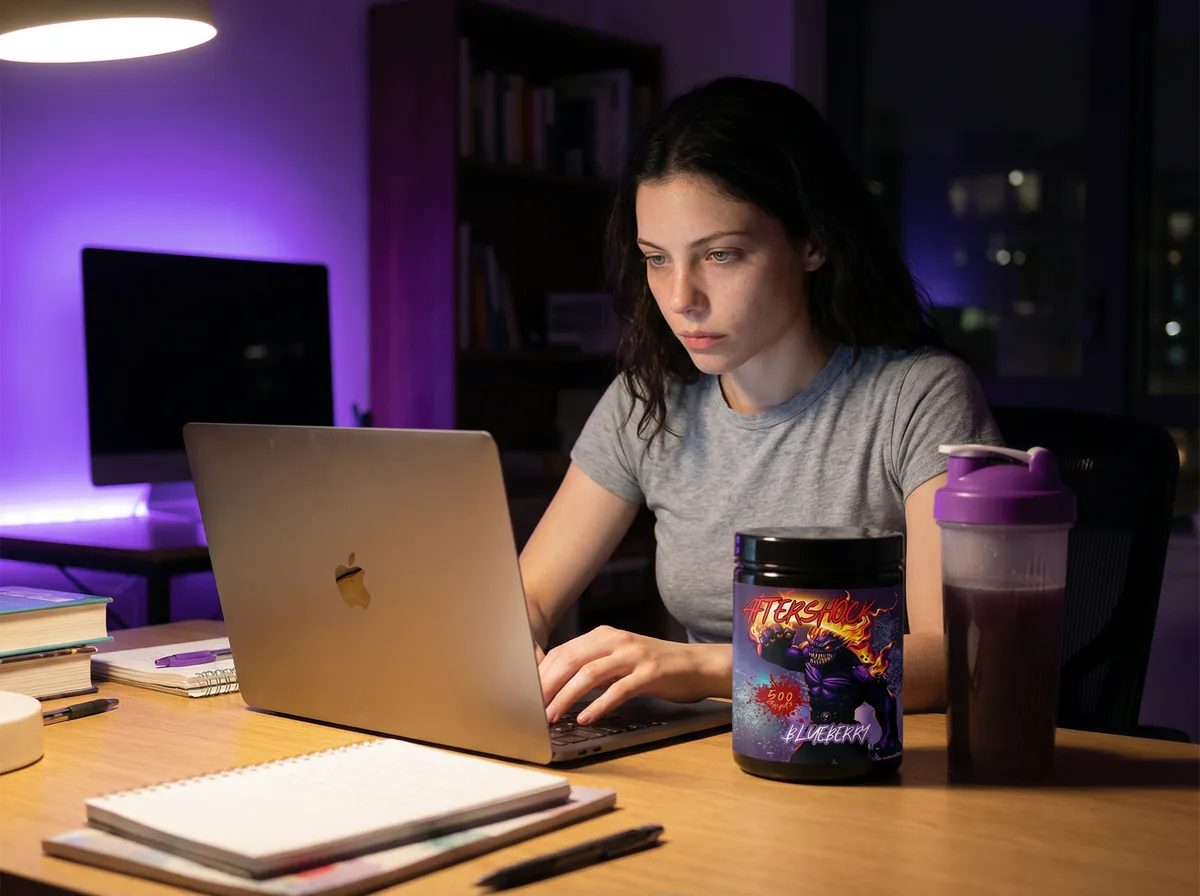
Training focus is not a single ingredient. It is the result of several things working together:
- enough alertness so you do not drift through the session
- enough calm so you are not shaky or overstimulated
- the ability to hold technique and pacing
- motivation without mental noise
That is why some pre-workouts feel worse than expected even when they are strong. You feel energy, but your attention jumps around, technique gets sloppy, and the workout becomes noisy rather than productive.
With Aftershock, the key point is that the formula is not built only around high caffeine. It is trying to create a more usable training feel, not just a stronger jolt.
Caffeine and L-theanine: the core of the focus profile
Caffeine is still the main driver of alertness. That is true for Aftershock just as it is for most pre-workouts. It is also the ingredient where many people hit the line between “this helped” and “this is now too much.”
The ISSN position stand on caffeine notes that caffeine can acutely improve several aspects of performance, but also makes clear that response varies by person, dose, and tolerance. ISSN position stand on caffeine and exercise performance
L-theanine matters mainly because, in combination with caffeine, it may change the subjective feel for some users. Older controlled work and a newer systematic review suggest that caffeine plus theanine may support some attention-related outcomes better than placebo. Haskell et al. and systematic review/meta-analysis
In practice, that only means:
- some people prefer the combination to caffeine alone
- some will not notice a major difference
- even L-theanine will not rescue excessive caffeine dosing or poor recovery habits
Lion’s mane, rhodiola, and ginseng: a supporting layer, not a guarantee
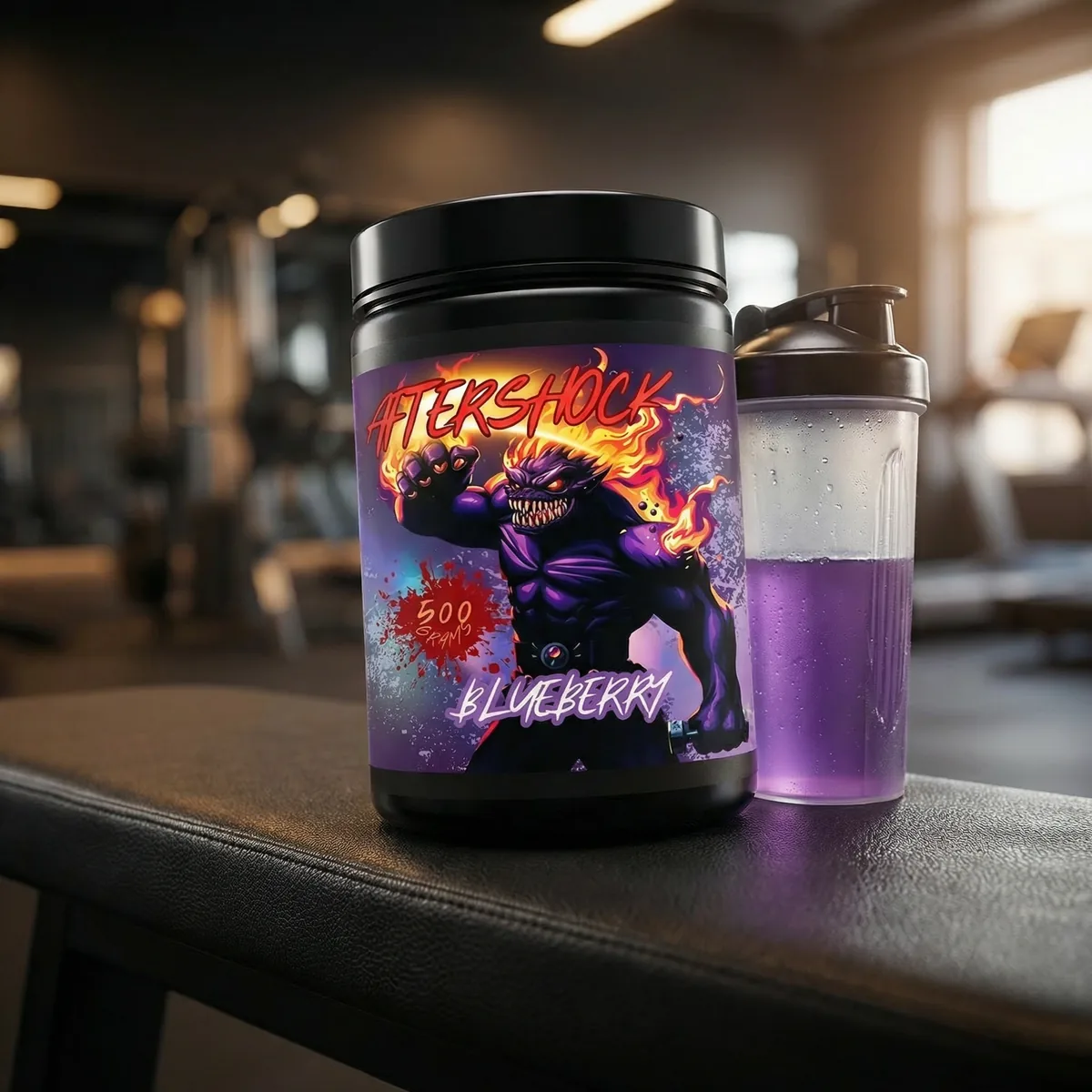
Aftershock also includes lion’s mane, rhodiola, and ginseng. Here, realism matters. These ingredients may add to the product’s overall character, but they should not be framed as a guarantee of dramatic cognitive enhancement.
A more grounded way to think about the formula is this:
- caffeine does most of the acute alertness work
- L-theanine may shape the subjective experience
- the remaining ingredients help define the product profile rather than turn it into a standalone cognitive tool
That matters for trust as much as for product education. A pre-workout should not be presented as a substitute for sleep, a training system, or mental skills work. It makes more sense to say that some formulas are simply more pleasant and more usable for specific types of training.
Performance ingredients also shape the workout feel

Mental focus in training does not come only from nootropics. It is also affected by how your sets feel, whether you get the workout feel you want, and whether the session feels structured rather than empty.
That is why it matters that the formula also contains classic performance ingredients such as citrulline, creatine, and betaine. They are not stimulants, but they can improve workout feel and indirectly support focus by making the session itself feel better.
In practice, good training focus often looks very simple:
- you do not feel scattered
- you can hold technique
- you move through the session with control
- you do not feel like the product just slammed you into the wall
How to use Aftershock sensibly
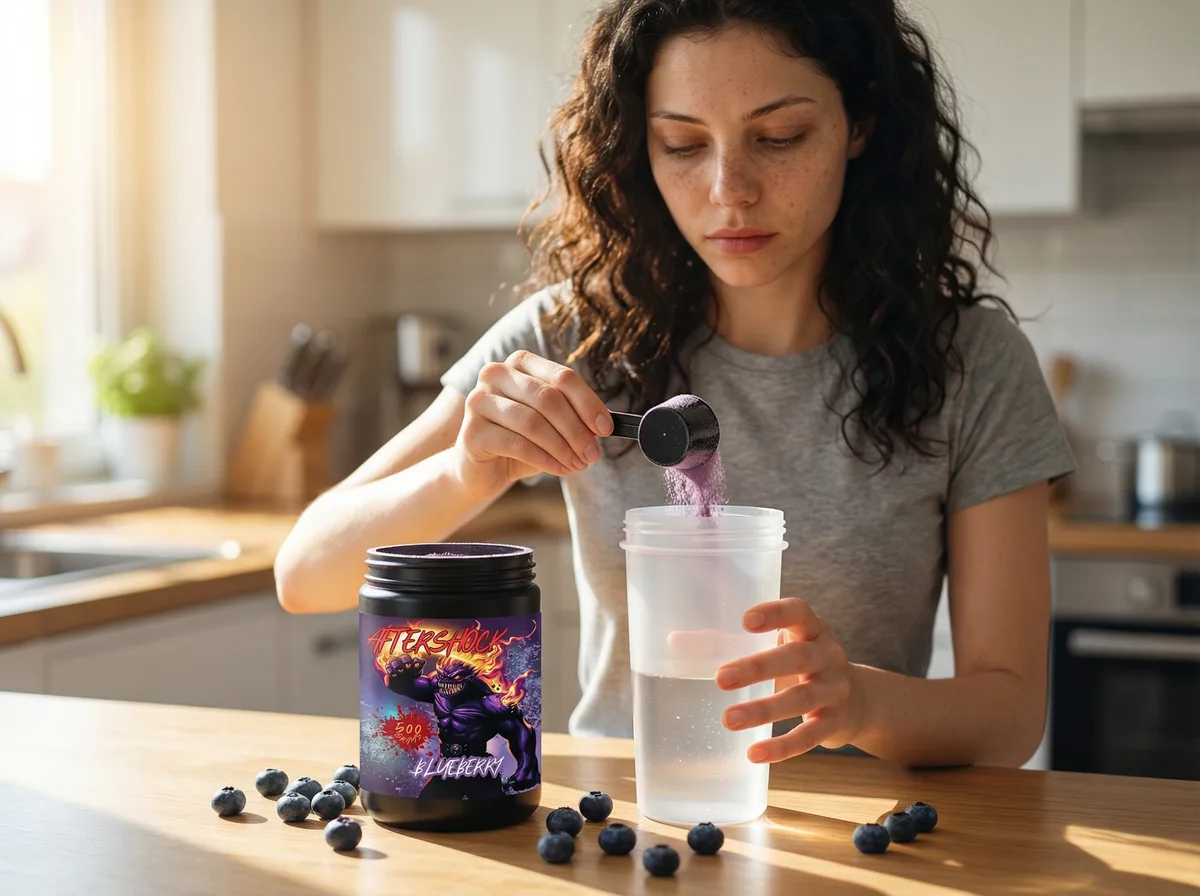
If Aftershock is supposed to support mental focus, how you use it matters.
A more sensible approach:
- Start conservatively, especially if you do not know how you respond to caffeine.
- Count your coffee and other stimulant intake during the day.
- Do not use the product as a patch for long-term sleep debt.
- If you train late, be honest about whether a stimulant product fits at all.
Aftershock can make sense for someone who wants a more balanced focus-oriented pre-workout. It does not make sense to pretend it will solve every situation. If caffeine regularly hurts your sleep or if you really want a stim-free option, it is better to recognize that immediately.
Frequently Asked Questions
Is the mental focus effect mainly about caffeine?
Largely, yes. Caffeine is the main alertness driver. The rest of the formula shapes the overall feel.
Does L-theanine actually help?
For some people, yes, mostly subjectively. The usual expectation should be a smoother feel rather than a dramatic effect.
Is Aftershock suitable for work or study?
It is primarily a pre-workout. It may fit training focus well, but it is not necessarily the best tool for all-day productivity.
Are lion’s mane and rhodiola the main reason the product works?
No. For most people, the main acute effect will still be driven by caffeine and the broader formula profile.
Does it make sense if I train in the evening?
Only if you know caffeine fits your sleep well. Otherwise, a caffeine-free option may be smarter.
Related Articles
Try Aftershock and experience the power of nootropics.
Order Aftershock