
What are nootropics for focus and when do they make sense
Nootropics for focus are substances or combinations of substances used to support alertness, attention, mental energy, or a subjective feeling of a "clearer head." In practice, people include caffeine, L-theanine, tyrosine, certain mushroom extracts, and other supplements associated with performance at work, studying, or gaming. It is important to distinguish between marketing promises and what available data actually supports.
They make sense especially in situations where you need better short-term alertness or more stable focus, but don't want to rely solely on large doses of stimulants. This applies to deep work, exam periods, long drives, pre-workout, or gaming. However, if sleep, movement, food, and a reasonable routine are missing, even the best nootropics for focus won't perform miracles.
A smarter approach is to view them as a supplement to the basics, not a replacement. If you are interested in the broader context of performance, the article How to Increase Focus: 10 Steps for Higher Performance offers a useful foundation. In practice, the best results occur when sleep, hydration, stable energy intake, and only then targeted supplementation are combined.
| Substance | Typical Goal | What to Expect | Note |
|---|---|---|---|
| Caffeine | Alertness, reaction time | Fast onset of action | Higher doses more frequently increase jitteriness |
| L-theanine | Calmer focus | Can smooth out the stimulant profile of caffeine | Often used in combination |
| L-tyrosine | Performance under stress | Particularly interesting in demanding conditions | Not an "instant hack" for everyone |
| Lion's Mane | Long-term cognitive interest | Data is promising but not definitive | Systematic use rather than acute effect |
If you train and want to combine physical performance with focus, well-thought-out pre-workout blends are also practical. Evolved, as a Slovak brand, relies on transparent formulas and clear dosing, which is a major plus in this category. To navigate broader supplementation, see Supplements for Athletes: What to Know Before Choosing.
Which nootropics for focus have the best data
If we stick to substances with the strongest practical support, caffeine takes first place. It is well-researched, has a relatively predictable onset of action, and at a reasonable dose, can support alertness, attention, and a subjective sense of energy. Authoritative sources on caffeine safety and limits can be found, for example, at the FDA and in the EFSA assessment.
The combination of caffeine and L-theanine is very interesting. Caffeine alone can help, but in sensitive individuals, it can also cause jitters, pressure, or fragmented attention. L-theanine is therefore often used to "smooth out" the stimulant profile; studies on this pair suggest better subjective focus and less distracting tension than with caffeine alone. Wikipedia: L-theanine helps with an overview, and data in the PubMed database is also interesting.
Another frequently mentioned substance is L-tyrosine. This is mainly interesting when a person is under psychological stress, pressure, or in conditions of fatigue. This doesn't mean it must "work" for everyone during every work block, but in stressful situations, it makes sense to consider it carefully and realistically; more context is provided in Tyrosine Effects and Dosage.
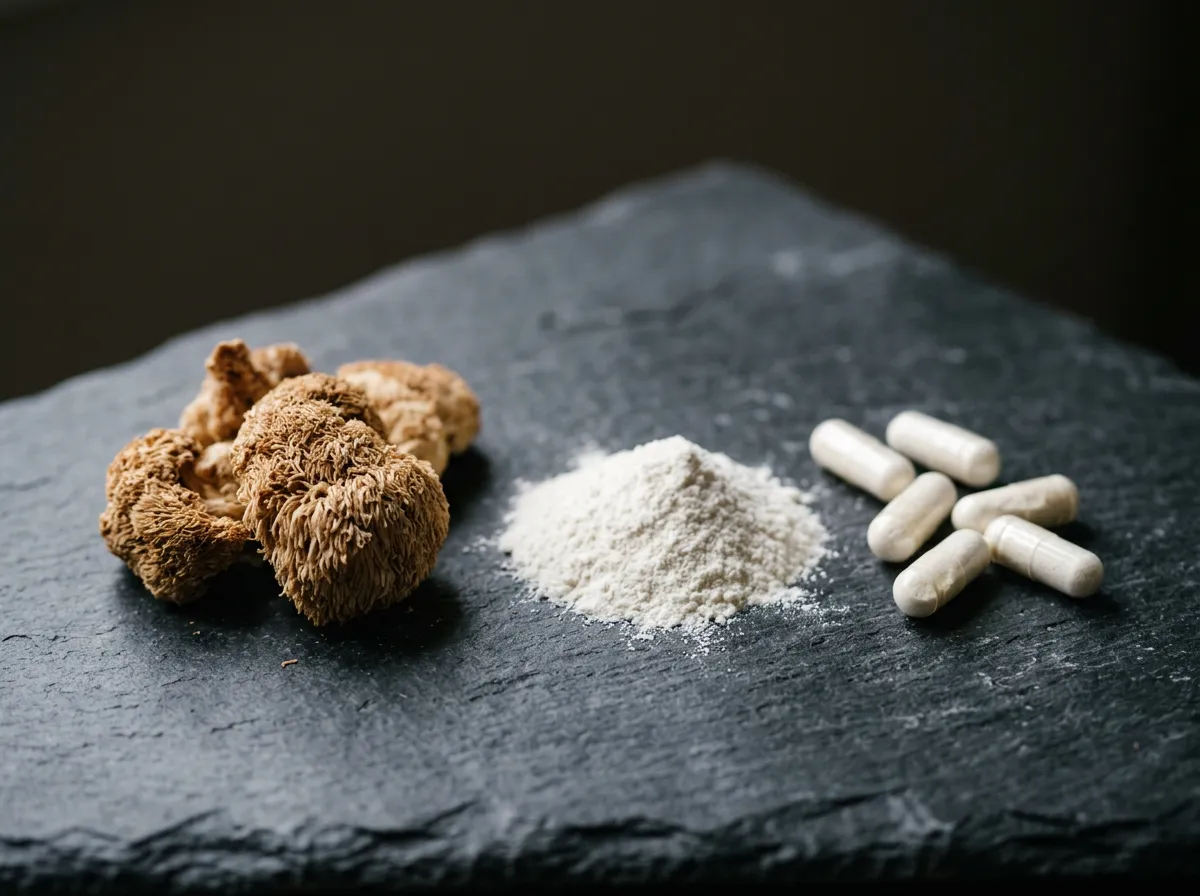
Lion's Mane is popular, but one should maintain perspective. There is a lot of interest surrounding its effects on cognition, but in practice, it belongs more to the category of promising rather than definitive data. If you are interested in a more detailed look without exaggerated promises, the article Lion's Mane Effects: What Studies Show in Practice is useful.
-
Strongest data foundation: caffeine for alertness and attention.
-
Most practical combination: caffeine + L-theanine for smoother focus.
-
Interesting for stress: L-tyrosine, especially in mentally demanding conditions.
-
Long-term interest rather than an acute "boost": Lion's Mane.
In this topic, the ability to filter out substances that sell well but have a weak foundation also helps. The more complicated the composition and the more unclear the doses, the more cautiously one should approach promises of a "brain boost." A more practical selection usually wins over an exotic list of ingredients.
How to read ingredients and dosage without mistakes
The most common mistake is that people only look at the front label and not the back ingredients list. A product may communicate "focus," "nootropic," or "premium formula," but what matters is how much of a specific substance is in one dose. If a blend does not state exact amounts, you cannot judge its effectiveness, risk, or whether you are primarily paying for marketing.
The second mistake is confusing the number of active ingredients with product quality. In practice, a shorter, transparent formula is usually better than a long list of micro-doses that look scientific. Therefore, in the nootropics category, it is wise to look for clearly named substances, exact doses per serving, and a clear explanation of who the product is intended for.
This is exactly where a simple filter matters: read caffeine, L-theanine, tyrosine, and other active substances separately, not as one marketing block. If a product contains, for example, 160 mg of caffeine, that is specific information you can work with. When supplemented with 100 mg or 400 mg of L-theanine, you can immediately better estimate whether it has a sharper or smoother effect profile.
-
Check the dose per serving. Not per 100 g, not per two servings, but per actual use.
-
Look for exact amounts. Proprietary blends with unclear ratios are a weak signal.
-
Monitor stimulants separately. Always count caffeine, synephrine, or other stimulating substances.
-
Consider timing. What works before a workout may not be suitable in the evening.
-
Compare the product's purpose. A different composition makes sense for the gym versus office work.
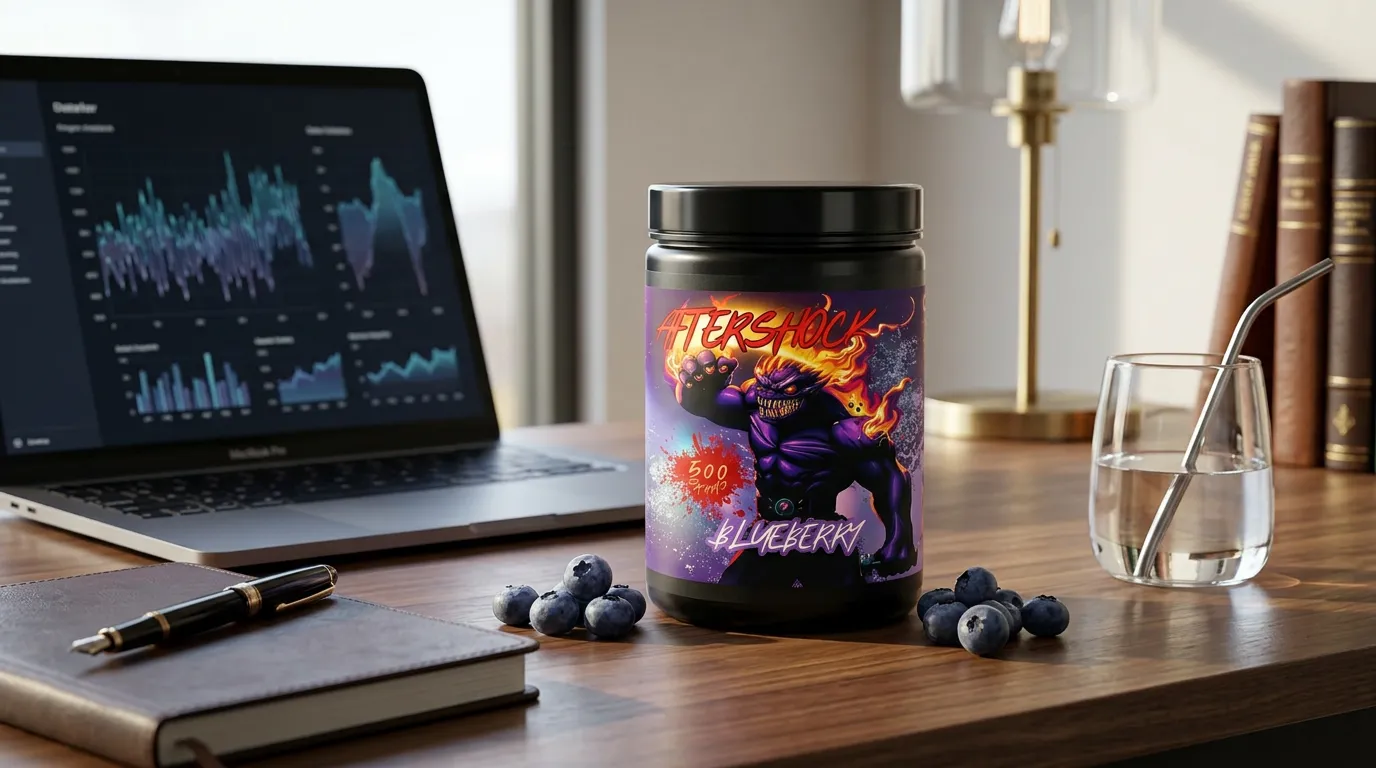
If you want to see what a more transparent approach looks like in practice, a good example is Aftershock Original (V1), where key data like 160 mg of caffeine, 100 mg of L-theanine, and 5 g of L-citrulline are known. For users who want a smoother sense of focus, Aftershock V2 Premium (V2) with 160 mg of caffeine and 400 mg of L-theanine is interesting. Evolved thus demonstrates an approach that is smarter for nootropics than vague "secret blends."
Caffeine, L-theanine, and other combinations in practice
The most common practical combination is caffeine plus L-theanine. The reason is simple: caffeine often helps with alertness and pace, while L-theanine can subjectively reduce the restlessness some people feel after stimulants. The result is focus that doesn't feel as "jittery," which people appreciate at the computer, while studying, and during training.
In practice, however, there is no single universal dose for everyone. Sensitivity to caffeine varies significantly, and it also matters whether you are rested, fed, and at what time you use the substances. If someone reacts with nervousness even to a small amount of caffeine, a higher proportion of L-theanine may make more sense than further increasing stimulants.
For sports-oriented use, it is interesting when focus is combined with the performance aspect. Aftershock Original (V1) is more suitable for training, gym sessions, and gaming, where one wants a moderately stimulating profile with a focus component. Aftershock V2 Premium (V2) is closer to users who want more L-theanine and a smoother feel during focus-oriented use; this is also complemented by the article Synergy of Caffeine and L-theanine for Athletic Performance: Doses.
-
For studying or office blocks: preferably low to medium caffeine, with L-theanine if needed.
-
For gaming: the goal is alertness without overstimulation and without a sudden crash.
-
Before training: alongside focus, the performance components of the product need to be addressed.
-
In the evening hours: caffeine is often a bad idea even when you subjectively feel fine.
It is also interesting to think about the "second half of the day." If someone uses stimulants too late, sleep may subsequently fail, and the next day they need even more support. Therefore, sleep and sensible caffeine timing also matter for performance. More on magnesium and its forms can be found in Magnesium for Sleep: Which Form Works Best. If you want magnesium without stimulants, there is Chilliček with the bisglycinate form of magnesium. It is not a sleep product, though.
Risks, limits, and who nootropics for focus are not suitable for
Nootropics for focus are not neutral for everyone. The most common problem is overestimating the dose, combining multiple sources of caffeine, and ignoring one's own tolerance. If you already drink coffee, an energy drink, and then take a supplement with stimulants, the result may not be better performance, but rather jitters, pressure, restlessness, and worse sleep.
A major limitation is that an acute sense of motivation may not mean better actual performance. Some people feel more productive after a stimulant product but make more mistakes, have a harder time switching between tasks, or get distracted. That is why it is good to test new combinations first on a less critical day, not before an exam, presentation, or a demanding match.
Caution is advised for people with sensitivity to stimulants, sleep problems, anxiety, high blood pressure, heart issues, or those taking medication. The same applies to pregnant and breastfeeding women or individuals who are unsure how their health status aligns with a given substance. In such cases, it is wiser to consult a doctor or pharmacist first rather than trying strong stacks blindly.
If you play competitively or participate in high-performance sports, it is worth verifying the overall quality of the brand and the clarity of the label. Therefore, it is useful to read not only the product page but also a broader explanation of the brand philosophy, for example, Is Evolved Suitable for Athletes? The Facts. A sensible choice means less impulse, more control, and a lower risk of ruining your recovery or tolerance for the sake of a short boost.
FAQ
Which nootropics for focus have the best effect?
The best-supported foundation is usually caffeine, especially if the goal is alertness and a fast onset of action. The combination of caffeine and L-theanine is also very practical, as it can offer a more balanced focus than the stimulant alone. Substances like tyrosine or Lion's Mane have their place, but their use is more contextual.
Are nootropics for focus suitable for students and gamers?
They can be, if used wisely, with respect to dose and timing. For both studying and gaming, stable focus without excessive nervousness makes sense, which is why many prefer more moderate combinations. However, it still holds that without sleep, food, and breaks, results will be weaker than marketing promises.
How long before studying or work should you take nootropics for focus?
Most people handle timing about 30 to 60 minutes before a block of work or study, but it depends on the specific substance and product form. With caffeine, it is wise to consider the time of day so it doesn't interfere with evening sleep. It is best to test a lower dose on a regular day before using it for an important performance.
If you are looking for a realistic view without cinematic promises, good additional context is provided in Is There a Pill Like NZT-48? What Science Says About Nootropics. When choosing, it pays to stick to a simple rule: less hype, more transparent ingredients, a reasonable dose, and a clear reason why you are using the product in the first place.
Try Aftershock and experience the power of nootropics.
Order Aftershock