
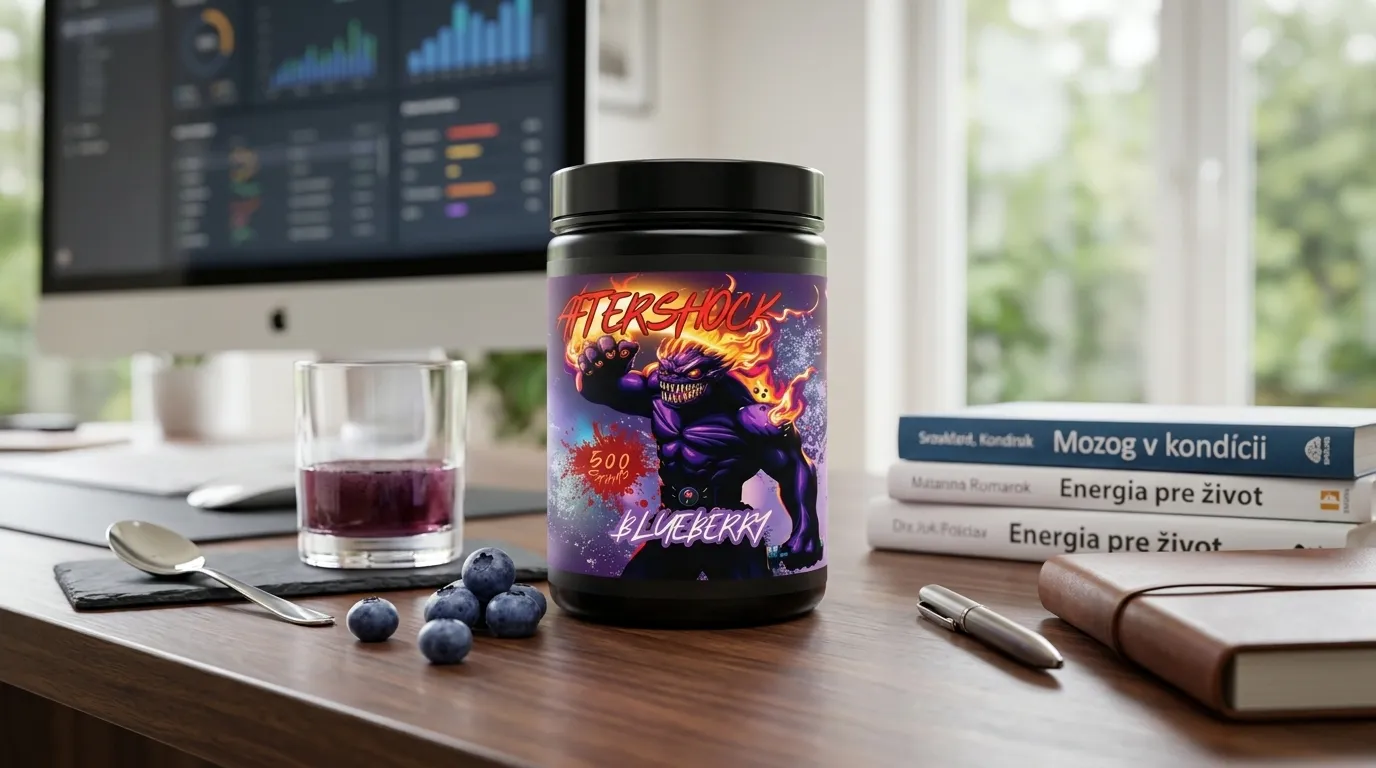
Creatine for brain and energy is no longer just a fitness topic. In 2023 and 2024, papers were published showing that creatine can be beneficial not only for strength but also for mental resilience – especially when you are sleep-deprived, under stress, or combining training with demanding work. It is not a stimulant like caffeine. Its role is more of an "energy infrastructure"; it helps recycle ATP, the immediately usable cellular energy needed by both muscles and the brain.
The more accurate question, then, is not whether creatine is only for muscles, but when creatine for brain and energy makes real sense, who it is worth it for, what dosages are practical, and what to combine it with without unnecessary hype. Below you will find a concise, updated, and usable overview based on both studies and practice.
Creatine is a simple molecule with very well-researched uses in performance, recovery, and energy metabolism.
How creatine works in the brain and for energy
The body produces creatine naturally, and we obtain part of it from our diet, especially from meat and fish. Its main role is to support the restoration of ATP. This is why it is famous in sports, but the same mechanism is also interesting for the brain, which has a high and continuous energy consumption.
In practice, this means that creatine does not act as a "booster." Rather, it helps reduce energy pressure in situations where you are pushing the limits: after poor sleep, during a long workday, while studying, under stress, or during a combination of physical and mental load. This is precisely why creatine for brain and energy is now associated with topics like brain fog, more stable focus, and a reduced feeling of being "drained" in the afternoon.
An important detail is that the brain is not a muscle. Creatine does not enter the central nervous system as easily; therefore, the cognitive effect tends to be less dramatic and less predictable than the increase in performance at the gym. This is also why the effect is most interesting in a specific context, rather than universally for everyone.
| Area | What creatine does | When it makes the most sense |
|---|---|---|
| Brain | Supports cellular energy metabolism | Sleep deficit, mental load, fatigue |
| Muscles | Helps restore ATP during intense work | Strength, sprinting, repeated sets |
| Recovery | Supports performance maintenance under cumulative load | Training + work + little sleep |
| Energy during the day | Not a stimulant; rather a stabilizing foundation | With regular use over several weeks |
If you want a more detailed foundation on forms and classic use, follow up with the article Creatine Dosage: How Many Grams Per Day and also the practical texts Creatine and Recovery: What Practice and Research Say and Creatine and Recovery: When It Helps the Most.
Creatine is relevant because it relates to the restoration of ATP, which is immediate cellular energy.
What studies say about creatine, fatigue, and focus
The data is promising, but not magical. The most accurate summary is this: creatine does not have a large and consistent nootropic effect for every healthy person under all circumstances, but in certain situations, it can help more than on an "ideal" day without stress.
A highly cited study in Scientific Reports (2024) involved 15 participants who received a single dose of 0.35 g/kg of creatine during partial sleep deprivation. The result was interesting: information processing speed improved and brain energy markers also changed. This does not mean everyone should try high doses, but it supports the idea that creatine can help especially in a state of acute fatigue.
Conversely, a large randomized study in BMC Medicine (2023) followed healthy adults at a dose of 5 g daily for 6 weeks and found a small to uncertain effect on cognitive performance. This serves as an important reality check against overblown promises: creatine is not a universal "brain hack."
Also interesting is a systematic review in Nutrition Reviews (2026), which focused on older adults. It included 6 studies and 1,542 participants; in 5 out of 6 studies (83.3%), a positive relationship between creatine and cognition appeared, especially in the areas of memory and attention. This is not yet proof that creatine protects against dementia, but it is a strong reason to take the topic seriously for people over fifty.
blockquote> “The current limited evidence suggests that creatine may be associated with benefits for cognition in generally healthy older adults.”
Nutrition Reviews, February 1, 2026
For everyday practice, this means three things. First, creatine for brain and energy makes the most sense when the energy system is under pressure. Second, older adults, vegans, vegetarians, and people with frequent sleep deficits may be more interesting groups than young, well-rested, and healthy individuals without stress. Third, the effect is realistically stabilizing rather than dramatic.
If you are interested in the broader context of cognitive supplements, it is useful to compare creatine with other categories. Relevant articles include Semax vs. Common Nootropics: Comparison of Effects, How Semax Works: What Studies Show, Selank: Effects, Risks, and What Studies Say, and a sober analysis of NZT-48: Effects, Risks, and Reality. Compared to these, creatine is more of a basic energy tool than a "smart drug."
The most interesting results for creatine for the brain often appear specifically during sleep deprivation and high mental load.
Dosage and practical combinations
For most people, the most practical approach is 3 to 5 g of creatine monohydrate daily. This is a regimen that provides a good balance between effect, cost, and tolerance. With creatine, consistency matters more than the exact hour of intake.
-
3 g daily is a reasonable start for a more sensitive stomach or a smaller physique.
-
5 g daily is a common universal dose for most active people.
-
Loading 20 g daily divided into 4 doses for 5 to 7 days can saturate stores faster, but it is not necessary for the brain and general energy.
If your goal is creatine for brain and energy, do not expect an effect after a single dose like with coffee. It is much more realistic to expect a smaller drop in performance, a more stable day, and better tolerance of stress after several weeks of regular use.
Combinations make sense if you understand what each substance addresses:
-
Creatine + caffeine: caffeine helps quickly with alertness; creatine helps more with the energy foundation. Caffeine safety limits are well summarized by EFSA.
-
Creatine + L-theanine: useful if you want a less jittery focus with caffeine.
-
Creatine + magnesium in the evening: a logical combination when you address performance during the day and recovery and sleep in the evening.
A practical example of a transparent stimulant-focus formula can be found in the products Aftershock Original (V1) and Aftershock V2 Premium (V2). If you want to see a brand product detail in content form, the anchor Aftershock Original is also usable. For an evening routine and recovery, Chilliček makes more sense if you need to separate stimulation from calming down.
When choosing pre-workouts or combinations, it pays to read labels carefully. The article Safe Pre-Workout: How to Read the Ingredients explains well why it is not enough to just follow the marketing name, but the entire dosage profile.
Who creatine makes sense for and when to be cautious
Creatine has a very good safety profile, but it is not automatically equally useful for everyone. It makes the most sense for people who want to cover performance, recovery, and mental energy with one substance without extreme promises.
-
Active people who combine training, work, and mental load.
-
Vegetarians and vegans, who may have a lower intake of creatine from their diet.
-
Older adults, for whom the topics of muscle, energy, and memory intersect.
-
People with frequent lack of sleep, where the data is more interesting than in a normal well-rested routine.
Caution is advised in cases of diagnosed kidney disease, unclear laboratory findings, and when taking medications that may strain the kidneys. A basic summary of safety and sports supplements can also be found in materials from the NIH Office of Dietary Supplements. If you have a health problem, do not address creatine through a discussion forum, but with a doctor.
It is wise to have realistic expectations. Creatine for brain and energy is not a substitute for sleep, psychotherapy, depression treatment, or ADHD medication. It is rather a low-risk supplement that can help in a specific context. If you are interested in how Evolved approaches sources and content credibility, take a look at the Evolved editorial policy, the page about the Evolved brand, and the Evolved FAQ.
Short Summary
Creatine for brain and energy makes the most sense when you do not want another aggressive stimulant, but rather more stable performance under high load. Evidence is strongest for sleep deprivation, in older adults, and where energy reserves are lower. For most people, the most sensible foundation is 3 to 5 g of monohydrate daily, taken regularly and with realistic expectations.
FAQ
Does creatine help with mental fatigue and lack of sleep?
Yes, this is where the data is most interesting. A study in Scientific Reports from February 28, 2024, showed that during sleep deprivation, creatine can improve information processing speed and support brain energy markers. However, it still does not replace sleep.
What creatine dosage is suitable for supporting brain and energy?
For most people, a dose of 3 to 5 g of creatine monohydrate daily provides the best ratio of effect to tolerance. Higher doses have been studied under specific conditions, but are not necessary for a normal routine. You can find a practical foundation in the text Creatine Dosage: How Many Grams Per Day.
Is it better to take creatine in the morning, before training, or in the evening?
Consistency is what matters most. If it suits you in the morning or around training, that is fine. Evening can work too, as long as it does not cause digestive discomfort and is not a product with caffeine, such as Aftershock Original (V1) or Aftershock V2 Premium (V2).
Is creatine better than classic nootropics?
It depends on the goal. Creatine does not address stimulation as directly as caffeine or other nootropics, but it has a very strong profile in terms of energy foundation and long-term usability. For a broader comparison, continue through Semax vs. Common Nootropics: Comparison of Effects and NZT-48: Effects, Risks, and Reality.
Can I combine creatine with recovery and evening calming?
Yes. A common approach is creatine during the day and recovery in the evening. This topic is followed by the articles Creatine and Recovery: What Practice and Research Say and Creatine and Recovery: When It Helps the Most; for an evening routine, Chilliček may also make sense.
Creatine for brain and energy is no longer just a fitness topic. In 2023 and 2024, papers were published showing that creatine can be beneficial not only for strength but also for mental resilience – especially when you are sleep-deprived, under stress, or combining training with demanding work. It is not a stimulant like caffeine. Its role is more of an "energy infrastructure"; it helps recycle ATP, the immediately usable cellular energy needed by both muscles and the brain.
The more accurate question, then, is not whether creatine is only for muscles, but when creatine for brain and energy makes real sense, who it is worth it for, what dosages are practical, and what to combine it with without unnecessary hype. Below you will find a concise, updated, and usable overview based on both studies and practice.
Creatine is a simple molecule with very well-researched uses in performance, recovery, and energy metabolism.
Try Aftershock and experience the power of nootropics.
Order Aftershock