
Lion’s Mane is one of the most interesting mushrooms in supplements, but also one of the most overhyped. It is often written about as if it reliably “repairs the brain,” improves memory for everyone, and works almost immediately. Reality is more cautious. It has interesting mechanisms and some human data, but the clinical evidence is still smaller and less definitive than the marketing suggests.
Table of Contents
- Key Takeaways
- What Lion’s Mane is and why people care about it
- What the research says: interesting, but not a closed case
- What to watch for with dosing and extract quality
- Lion’s Mane and sport: where it may fit
- Safety and caution
- Where Aftershock fits
- Frequently Asked Questions
- Related Articles
Key Takeaways
| Takeaway | Detail |
|---|---|
| Lion’s Mane is scientifically interesting | Much of the attention comes from preclinical work related to the nervous system. |
| Human evidence exists, but is still limited | Smaller trials suggest potential, but this is not a finished story with high certainty. |
| The biggest problem is overstatement | Mechanisms and lab data are often presented as if they guarantee a practical result in everyone. |
| Product quality matters a lot | What you actually buy matters more than the fact that “Lion’s Mane” is on the label. |
What Lion’s Mane is and why people care about it

Lion’s Mane, or Hericium erinaceus, is an edible mushroom that is usually discussed in supplements through topics such as:
- memory and concentration
- long-term nervous system support
- mental clarity
- nootropic stacks without classic stimulation
The interest is not entirely invented. Preclinical research has spent years looking at compounds from this mushroom, especially in relation to nerve growth factor pathways and wider neurobiological questions. The problem is that an interesting mechanism is not the same thing as a reliable practical result in a healthy adult.
That is where most of the confusion starts.
What the research says: interesting, but not a closed case
With Lion’s Mane, it is important to separate:
- what preclinical data and mechanisms suggest
- what human trials actually show
Human evidence does exist, but there is not enough of it to honestly describe Lion’s Mane as a clearly proven nootropic for everyone. One of the better-known randomized studies followed people with mild cognitive impairment and suggested improvements in some scores during supplementation. Mori et al. / PubMed
At the same time, newer work in healthy adults paints a more mixed picture. Acute and short-term effects on cognition may be small, inconsistent, or inconclusive. Acute effects study / PMC
A more defensible conclusion is not:
- “Lion’s Mane clearly improves memory for everyone”
but rather:
- this is an interesting ingredient with biological potential and limited human data that do not justify dramatic promises
That is less exciting, but much more accurate.
What to watch for with dosing and extract quality

One major issue with Lion’s Mane is that people often compare products that are not really comparable. There is a big difference between:
- dried mushroom powder
- a concentrated extract
- fruiting body material
- mycelium-based material
That is why it helps to check at least a few basics:
- what exactly the product declares
- whether it is an extract and what kind
- whether the manufacturer says more than just the ingredient name
- whether the label is clearly described
It does not make much sense to obsess over one “magic” dose without context. Studies use different forms and durations. If someone claims one exact amount guarantees one exact effect, that is usually marketing, not careful interpretation.
Lion’s Mane and sport: where it may fit

In sport, Lion’s Mane makes more sense as a supporting ingredient inside a broader focus-oriented or nootropic formula. It does not make sense to pretend it will dramatically transform gym performance or competition outcomes on its own.
It may be interesting for people who care about:
- training focus
- mental fatigue under a demanding routine
- a nootropic angle without extreme stimulation
Even here, the basics still matter more: sleep, training structure, and sensible caffeine use. Lion’s Mane belongs more in the category of “potentially useful addition” than “main pillar of performance.”
Safety and caution
In general, Lion’s Mane is considered relatively well tolerated, but there is still no reason to act like certainty is absolute.
A grounded position:
- if you have a mushroom allergy, be careful
- if you use medication or manage a health condition, it is better to ask a clinician
- during pregnancy and breastfeeding, a conservative approach is sensible
This ingredient is often exaggerated in both directions. It is neither a miracle brain booster nor automatically a problematic compound. It is a supplement that benefits from a calm, realistic approach.
Where Aftershock fits
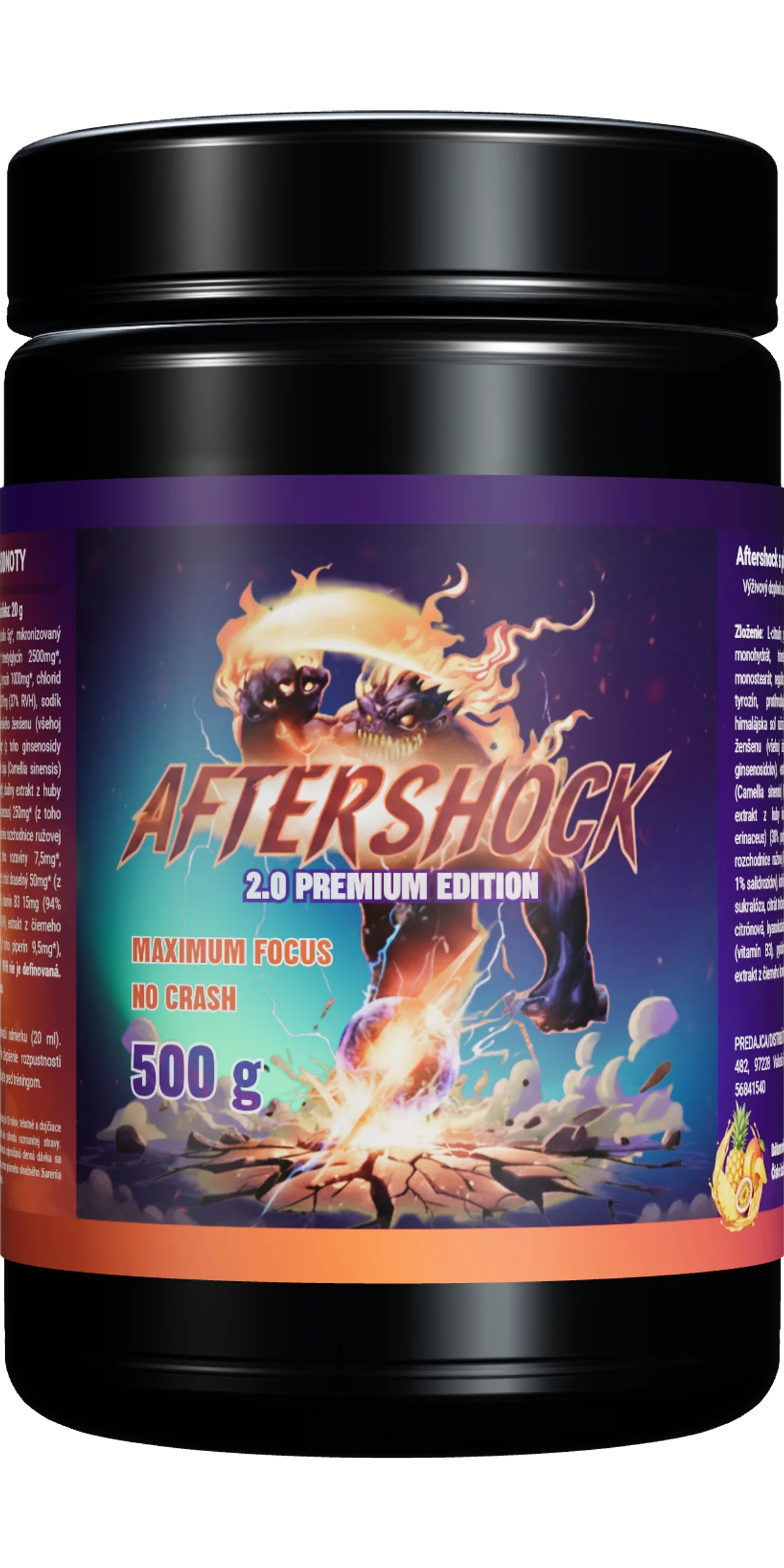
Aftershock V2 Premium includes Lion’s Mane as one ingredient inside a broader focus-oriented formula. That matters. It is not a pure Lion’s Mane product. It is a pre-workout where Lion’s Mane is only one part of a wider stack alongside caffeine, L-theanine, and other ingredients.
If you want to test Lion’s Mane on its own, it is fairer to look at a standalone product. If you want a pre-workout with a nootropic angle, Aftershock may make sense as a complete formula. Those are not the same question.
Frequently Asked Questions
Does Lion’s Mane help memory and focus?
Possibly, but the evidence is not as strong as marketing often implies. Human studies are still relatively small and not entirely consistent.
Is Lion’s Mane a stimulant?
No. It is not a classic stimulant like caffeine.
How long does it take to work?
It is not reasonable to promise an exact timeline. With this ingredient, people usually think in terms of regular use over time rather than an immediate effect.
Is extract better than plain powder?
It depends on the product and what exactly the manufacturer declares. The important thing is the actual form, not just the ingredient name.
Does Lion’s Mane make sense in a pre-workout?
It can, if you like a broader focus-oriented concept. It does not make sense to attribute the whole product effect to Lion’s Mane alone.
Related Articles
Try Aftershock and experience the power of nootropics.
Order Aftershock